


HEYTAOS.COM · ARTS & CULTURE
The Art of Being Here: How The PASEO Project Carries the Creative Spirit of Taos Forward
In a place where generations of artists have explored the meaning of their work beyond the demands of recognition, The PASEO Project is opening new possibilities for artistic expression, discovery, and human connection.
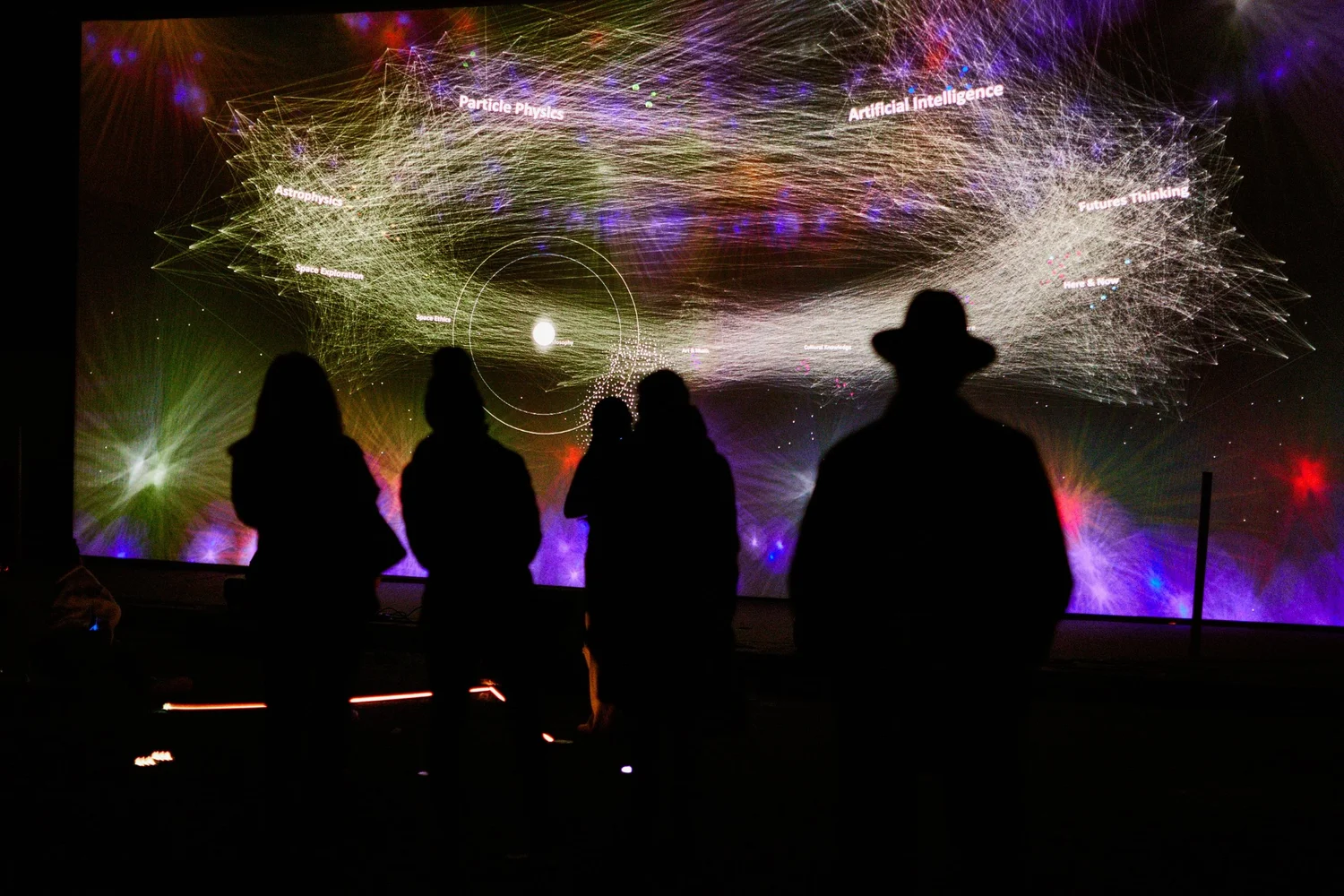
There are places where artists go to become famous, and places where they go to understand why they make art in the first place. I have always thought of Taos as a place that offers the possibility of the latter. Not because ambition or commercial success is somehow unwelcome here, but because the history of this community suggests that another kind of artistic life is possible. One in which curiosity, experimentation, and the pursuit of an idea can matter as much as its eventual reception.
An artist might spend years developing a painting, exploring a material, or attempting to express something that language cannot adequately describe. The outcome is not always certain, nor should it have to be. There is something valuable about the freedom to work without knowing whether the result will be understood, admired, or even exhibited. It allows art to remain an investigation rather than become simply another means of attracting attention.
That distinction is what makes The PASEO Project particularly interesting to me. In a town whose artistic reputation is often associated with painting, sculpture, and traditional craftsmanship, PASEO introduces another vocabulary: light, movement, sound, technology, and participation. It brings artistic ideas out of conventional exhibition spaces and into the public realm, where people encounter them without necessarily having intended to experience art at all.
And perhaps that is one of the most interesting things art can do.
Taos Has Never Stood Still
The cultural identity of Taos was established long before the emergence of its twentieth-century art colony. The living artistic traditions of Taos Pueblo and the Hispano communities of Northern New Mexico belong to distinct histories whose continuity contributes profoundly to the region's character. Later, the artists associated with the Taos Society of Artists helped establish the town's national reputation, while successive generations introduced different approaches to modernism, abstraction, and artistic expression.
The Harwood Museum of Art's documentation of the Taos Moderns offers a particularly revealing chapter in this history. During the years following the Second World War, artists from New York and San Francisco found in Taos an environment where they could work away from the distractions of larger cities. Painters including Beatrice Mandelman and Louis Ribak contributed to an artistic community increasingly engaged with abstraction and the broader developments of American modernism.
Their arrival did not replace the traditions that preceded them. It added another dimension to an already complex cultural landscape. What we now recognize as the artistic identity of Taos was never the product of a single movement, aesthetic, or generation.
That continuing evolution is important. A place can honor its artistic history without asking contemporary artists to repeat it. Indeed, the presence of so many different traditions makes Taos a particularly interesting setting for experimental art, because there is already a rich conversation about the relationship between artistic expression, cultural identity, and place.
PASEO enters that conversation with an entirely contemporary set of materials and possibilities.
When an Idea Becomes an Experience
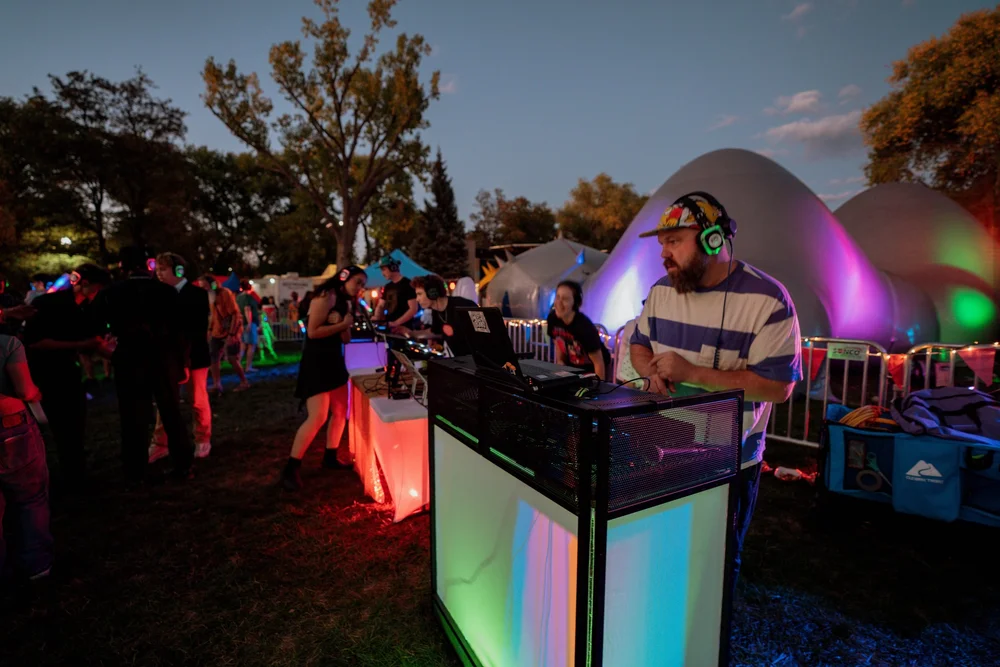
The PASEO began in 2014 as part of the Taos Fall Arts Festival and subsequently developed into an independent nonprofit organization in 2016. Its programming has brought regional, national, and international artists into public spaces through installations, projections, performances, and interactive works, many of them accessible without admission fees.
One of its most memorable presentations was Daedalum, the enormous inflatable luminarium created by Architects of Air and featured during PASEO's 2024 festival. Measuring approximately 7,000 square feet, the structure contained nineteen interconnected, egg-shaped domes illuminated by daylight filtering through colored materials. Instead of observing the work from a distance, visitors entered it, moving through a carefully constructed environment of light, color, and spatial relationships.
The interesting thing about this work is not simply its scale. It alters the conventional relationship between an artwork and its audience. There is no single viewpoint from which to understand the whole composition. The visitor's movement becomes part of the experience, while the changing quality of natural light contributes to the appearance of the interior.
The result is an artwork that cannot be adequately understood through a photograph. Its form depends on physical presence.
In 2025, artist Jessica Shen introduced another form of participation with you are here, an installation that employed sensors and LED lighting to translate human movement into illuminated waves. As participants moved through the space, their movements generated patterns of light. When people approached one another, their colors merged.
The artistic proposition is both simple and compelling. Our presence influences the spaces and people around us, even when those effects are not immediately apparent. Shen made that relationship visible through technology, allowing the interaction between individuals to become part of the artwork itself.
These projects offer two distinct approaches to contemporary artistic expression, yet they share something fundamental. Neither asks the audience simply to admire an object. Both invite the viewer to experience an idea.
That is an important distinction, and one of the reasons PASEO's work deserves a place in the wider conversation about contemporary art in Taos.
Beyond the Festival
The illuminated installations may be PASEO's most recognizable contribution, but the organization's artistic work extends well beyond its outdoor festival.
Its 2026 initiative, Disturbance: The Art and Ecology of Change, demonstrates how contemporary art can engage with subjects directly connected to the lives and landscapes of Northern New Mexico. Developed in collaboration with Del Fuego and the Forest Stewards Guild, the project brings artists, scientists, and community members into a shared investigation of wildfire, ecological transformation, and land stewardship.
The participating artists have explored fire-affected landscapes and engaged with scientific research and ecological knowledge. Their work considers fire not only as a destructive force but also as part of the complex processes through which landscapes change and regenerate.
It is an especially meaningful subject for this region. The relationship between human settlement, land management, and wildfire cannot be reduced to a single narrative. Art provides another way to approach that complexity, through forms of expression that can accommodate uncertainty, memory, emotion, and competing perspectives.
Among the participating artists is Jonathan Warm Day Coming of Taos Pueblo, whose work Deity - Disturbance brings together photography, archival pigment printing, and acrylic on canvas. His published artist statement considers the meaning of ancient rock art alongside contemporary concerns about ecological change and human relationships with the land. The work offers a locally grounded perspective within a program that includes artists and researchers from several regions.
PASEO's educational programs are equally important to its continuing presence in Taos. Its 2026 Disturbance youth initiative, developed with Twirl, engaged fourth- and fifth-grade classrooms across Taos County in creative activities related to fire ecology and environmental science. The public-facing A Forest in Motion project was scheduled for early October 2026. These activities brought scientific concepts into artistic practice and invited young people to experiment with forms of creative expression.
These programs broaden the possibilities of artistic education. They introduce students to the idea that creativity is not confined to painting or sculpture, and that scientific investigation and artistic expression can contribute to one another.
For young people growing up in Taos, exposure to these disciplines offers opportunities to discover forms of creativity they may not previously have encountered.
The Value of Discovering Something Unexpected
As an artist and collector, I have always been interested in the relationship between a work of art and the person experiencing it. Some works reward years of sustained attention. Others communicate something immediately, through a form, a gesture, an unexpected combination of materials, or a moment of recognition.
I do not believe one experience is inherently more meaningful than the other.
An artist working privately in a studio and an artist constructing an installation for a public audience may be engaged in very different practices, but both can begin with the same impulse: to discover something and find a way of expressing it.
What I appreciate about PASEO is its willingness to make these explorations accessible to people who might otherwise have little contact with experimental contemporary art. Its public programs allow artistic encounters to happen outside the expectations of a traditional museum or gallery. A visitor need not arrive with a particular level of knowledge. Curiosity is enough to begin.
There is also something significant about experiencing art collectively. A temporary installation can become a point of conversation among people with different backgrounds, experiences, and interpretations. Its meaning need not be identical for everyone who encounters it.
In Taos, where the coexistence of different cultural and artistic histories is part of everyday life, that openness seems especially appropriate.
PASEO is not attempting to reproduce the artistic movements for which Taos became famous. Its contribution lies in creating opportunities for new work, unfamiliar ideas, and forms of artistic collaboration that extend the community's creative possibilities.
The organization's transition to a biennial outdoor festival, beginning in 2027, is intended to provide additional development time for artists and community partnerships. The forthcoming edition carries the theme Convergence, exploring relationships between people, cultures, technologies, and different ways of understanding the world.
It is an intriguing subject for a place like Taos, whose cultural significance has emerged through a long and continually evolving history of artistic expression.
Ultimately, the value of a creative community should not be measured only by the reputations it has produced or the exhibitions it has hosted. It should also be found in the opportunities it continues to create for artists to explore new ideas and for the public to encounter them.
Taos has a remarkable artistic inheritance. The people who work here today have the opportunity to contribute to that inheritance in ways that earlier generations could scarcely have imagined.
The PASEO Project is helping make that possible.
And for anyone interested in discovering what art can become, that is reason enough to pay attention.
Discover What's Next at The PASEO Project
PASEO's upcoming programs offer several opportunities to experience its work firsthand.
On Thursday, October 22, 2026, from 4 to 7 p.m., artists-in-residence Andreas Matt and Sarah Funk present Math & Me / The Shape of Me at the UNM-Taos Klauer Campus. Developed through workshops with community participants, the exhibition explores mathematical formulas as a form of visual and personal expression. PASEO's official residency announcement provides venue details.
On Saturday, November 7, from 10 a.m. to 5 p.m., Disturbance Day: Questa takes place at the Wild Rivers Visitors Center near Cerro. The day includes artistic exhibitions, environmental discussions, hands-on activities, music, and opportunities to engage with the region's ecological history.
The Disturbance exhibition at the Gallery at Hotel Willa continues through January 31, 2027.
Looking further ahead, The PASEO Biennial returns September 17 and 18, 2027, bringing immersive installations, contemporary performances, and interactive artistic experiences back to historic downtown Taos under the theme Convergence.
The next encounter with something extraordinary may be closer than you think.